
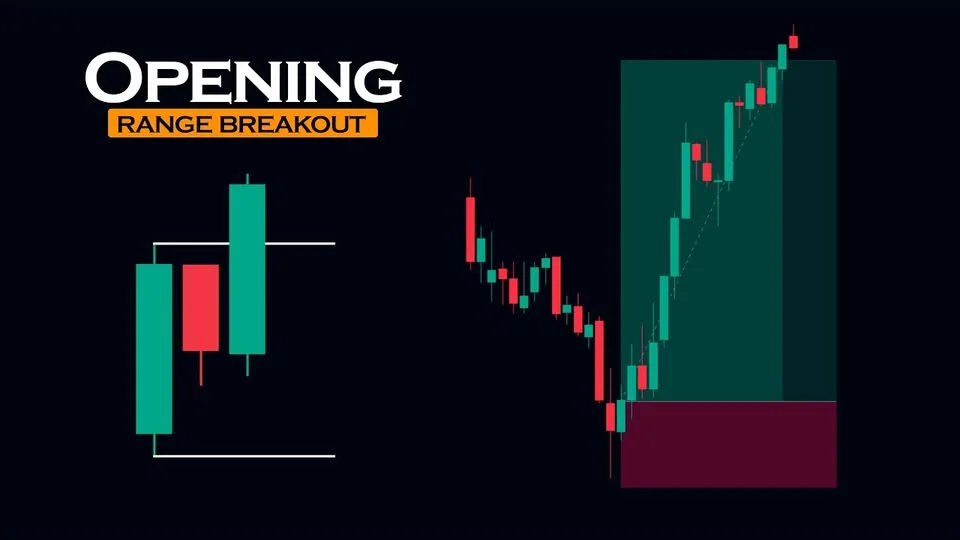
The Opening Range Breakout (ORB) is one of the oldest and most powerful day trading strategies. However, it is often taught as a superficial "break above or below the high/low of the first time period." This simplification misses the point: the true power of the ORB lies not in the breakout itself, but in the dynamics occurring inside the opening range.
What is the Opening Range?
The opening range is the price action formed during the first minutes of the main session (usually 5, 15, or 30 minutes). It represents the Initial Balance, the first test of liquidity, and the market's initial attempt to establish institutional direction.
The Core Philosophy: Understanding Institutional Intent
The premise of the ORB is that after forming the initial range, the market will attempt to break out when one side (buyers or sellers) overwhelms the other. Not every breakout is a tradeable opportunity. Only breakouts supported by genuine Order Flow Confirmation are significant.
Analyzing Inside the Range
- Range Width: Narrow ranges indicate accumulation, often preceding explosive moves.
- Absorption: High execution volume without significant price movement signals institutional positioning.
- Volume Behavior: Increasing volume within the range confirms institutional activity.
Scenarios: Real Breakout vs. False Breakout
1. The Valid Breakout
Characterized by a clear breach of the range, supported by an increase in footprint volume and persistent order flow, reflecting a decisive re-pricing of the market.
2. The False Breakout (Liquidity Trap)
Occurs when price breaches the range without volume support or faces immediate absorption. This is often an opportunity to trade in the opposite direction once recognized early.
Professional Execution Requirements
Don't trade the breakout; trade the acceptance. Acceptance is the deciding factor. If the price breaks, holds, and continues to trade outside the range, the market has "accepted" the new prices. If it snaps back inside, it is a rejection.
Risk Management Principles
- Stop Loss: Placed inside the range, just behind the breakout point.
- Profit Target 1: A measured move equal to the width of the range.
- Profit Target 2: Major liquidity zones or daily highs/lows.
Conclusion: The Institutional Perspective
Institutions don't just trade "a breakout." They trade the liquidity trapped outside the range and the stop-loss orders triggered by the move. Remember, the breakout is simply the means to reach the liquidity, not the end goal itself.
Comments (0)
Comments are moderated. Your comment will appear after it's approved.
Comments are moderated. Your comment will appear after it's approved.
Loading comments…